

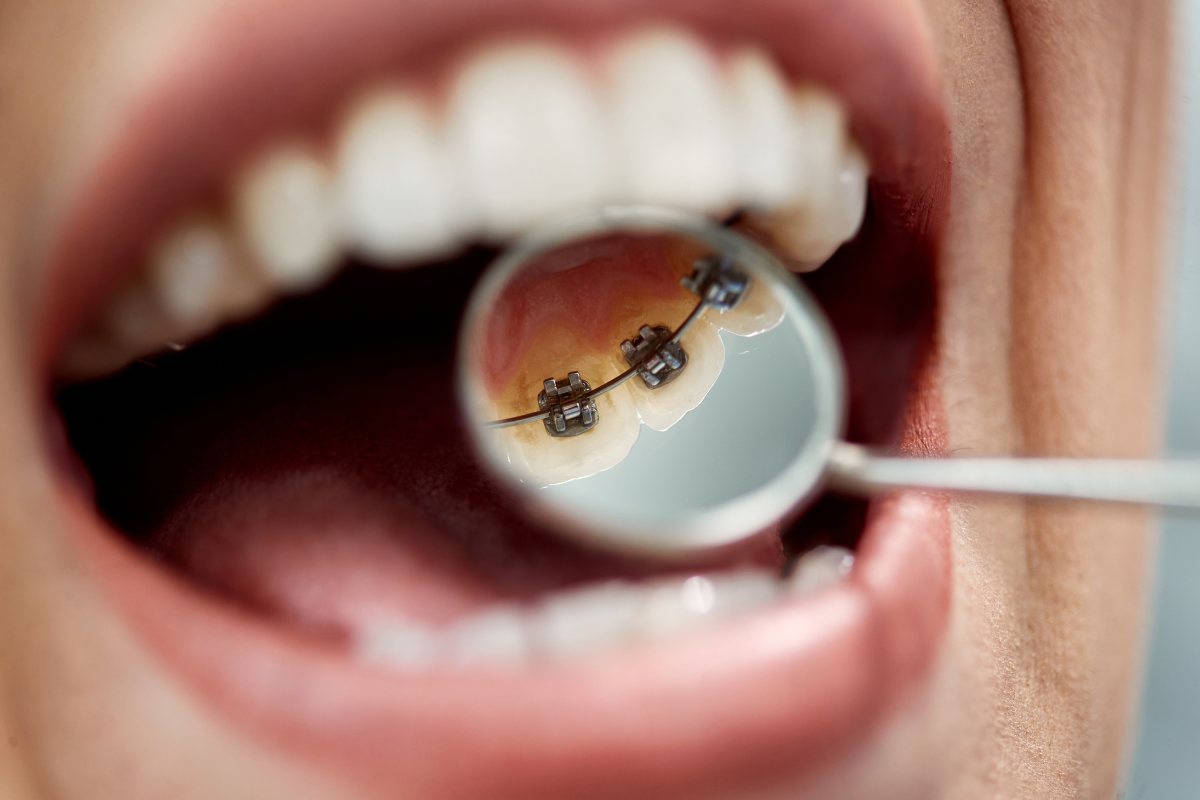
Many patients want to improve their smiles without drawing attention to their orthodontic treatment. Lingual braces offer a discreet option by placing the brackets and wires on the tongue side of the teeth, making them virtually invisible during everyday interactions.
If you’re considering lingual braces, you may wonder whether they’re an effective option for orthodontic treatment and if they’re suitable for more involved cases. Understanding how these braces work and what to expect during treatment can help you make an informed decision about your orthodontic care.
What Are Lingual Braces?
Lingual braces are metal braces that are placed on the lingual, or tongue side, of every tooth. Because they are positioned behind the teeth, they remain completely hidden from view in most situations.
Like traditional metal or ceramic braces that are attached to the front surfaces of the teeth, lingual braces work by applying gentle forces to move teeth into their desired positions. The primary difference is their placement, offering patients a more discreet orthodontic treatment option.
Although lingual braces may occasionally be visible when the mouth is opened wide, they are far less obvious than most other types of braces.
Can Lingual Braces Treat Orthodontic Concerns?
Lingual braces work in the same way as braces that are placed on the front of the teeth. Their design allows orthodontic treatment to be performed while maintaining a more natural appearance throughout the treatment process.
Every orthodontic case is unique. The most appropriate treatment option depends on several factors, including your individual orthodontic needs and treatment goals. An orthodontic evaluation is the best way to determine whether lingual braces are recommended for your specific situation.
The Benefits of Lingual Braces
One of the most significant advantages of lingual braces is their discreet appearance. Many patients appreciate being able to undergo orthodontic treatment without visible brackets on the front of their teeth.
Additional benefits include:
- Completely hidden placement behind the teeth
- Effective tooth movement using the same principles as traditional braces
- Greater confidence when smiling throughout treatment
- A discreet alternative for patients concerned about the appearance of braces
For individuals seeking a less noticeable orthodontic option, lingual braces can provide an appealing balance between aesthetics and treatment.
What Should Patients Expect?
As with any orthodontic appliance, there is an adjustment period when beginning treatment with lingual braces.
Because they are positioned on the tongue side of the teeth, patients may initially experience:
- Increased discomfort as they adapt to the appliance
- Greater difficulty maintaining proper oral hygiene
- Challenges becoming accustomed to speaking normally during the adjustment period
These experiences are common considerations when choosing lingual braces. Understanding these factors beforehand can help patients prepare for the transition and maintain realistic expectations throughout treatment.
Are Lingual Braces Right for You?
Lingual braces provide patients with an orthodontic treatment option that remains hidden from view while working similarly to braces placed on the front surfaces of the teeth. However, every patient’s orthodontic needs are different.
Determining whether lingual braces are appropriate—particularly when considering the complexity of your orthodontic concerns—requires a thorough orthodontic evaluation. Your orthodontist can recommend the treatment approach best suited to your smile and individual goals.
A Discreet Approach to Orthodontic Treatment
For patients who value a more discreet treatment experience, lingual braces offer the unique advantage of being virtually invisible during daily activities. While they may require additional time to adjust to and can present certain challenges with comfort, speech, and oral hygiene, many patients appreciate their hidden design.
Learning about all of your orthodontic treatment options is an important first step toward achieving a healthier, more confident smile.